
Holding stablecoins on Ethereum can feel pointless when the wallet balance is modest. You find a decent yield opportunity, go to deposit, and the gas cost eats the value of the move. Then rates shift again, and rebalancing feels even less worth it.
That's the gap the Base chain closes. It gives stablecoin users a place to use DeFi without treating every transaction like a major capital allocation decision. For anyone trying to earn yield on USDC, especially through more active allocation rather than just parking funds and hoping, that changes the game.
Your Gateway to Low-Cost DeFi on Base
Base chain matters because it makes small and frequent DeFi actions economically realistic again. If you're rotating stablecoins between lending markets, vaults, or automated strategies, cheap execution isn't a nice bonus. It's the difference between a workable system and one that leaks returns at every step.
Base launched on August 9, 2023 and moved fast. By August 2024, it had surpassed Arbitrum in protocol revenue, and it did that while keeping average transaction fees around $0.01811, averaging 98.6 TPS, and processing over 5.5 billion transactions, according to ChainCatcher's overview of Base chain growth. That's not just headline growth. It signals that Base already has real user flow, real apps, and enough activity to matter.
For a stablecoin holder, the useful takeaway is simple. Base is no longer the “up and coming” route for low-fee DeFi. It's already a serious venue for it.
Why this matters more than hype
There are plenty of chains that market themselves as fast and cheap. What usually matters in practice is whether people use them, whether liquidity shows up, and whether major infrastructure supports them. Base has an edge here because it combines low-cost execution with Coinbase distribution and a growing DeFi environment.
A lot of users arrive at the same point: they want yield, but they don't want to babysit five dashboards or spend half their return on gas. That's why Base has become such a natural home for stablecoin strategies, and why tools in the ecosystem keep improving around it.
If you're comparing where to start, this overview of the best DeFi apps on Base is a useful next read because it shows the actual app layer, not just the chain thesis.
Base chain is attractive when your strategy depends on moving often, reacting quickly, and keeping transaction costs too small to matter.
What Exactly Is the Base Chain
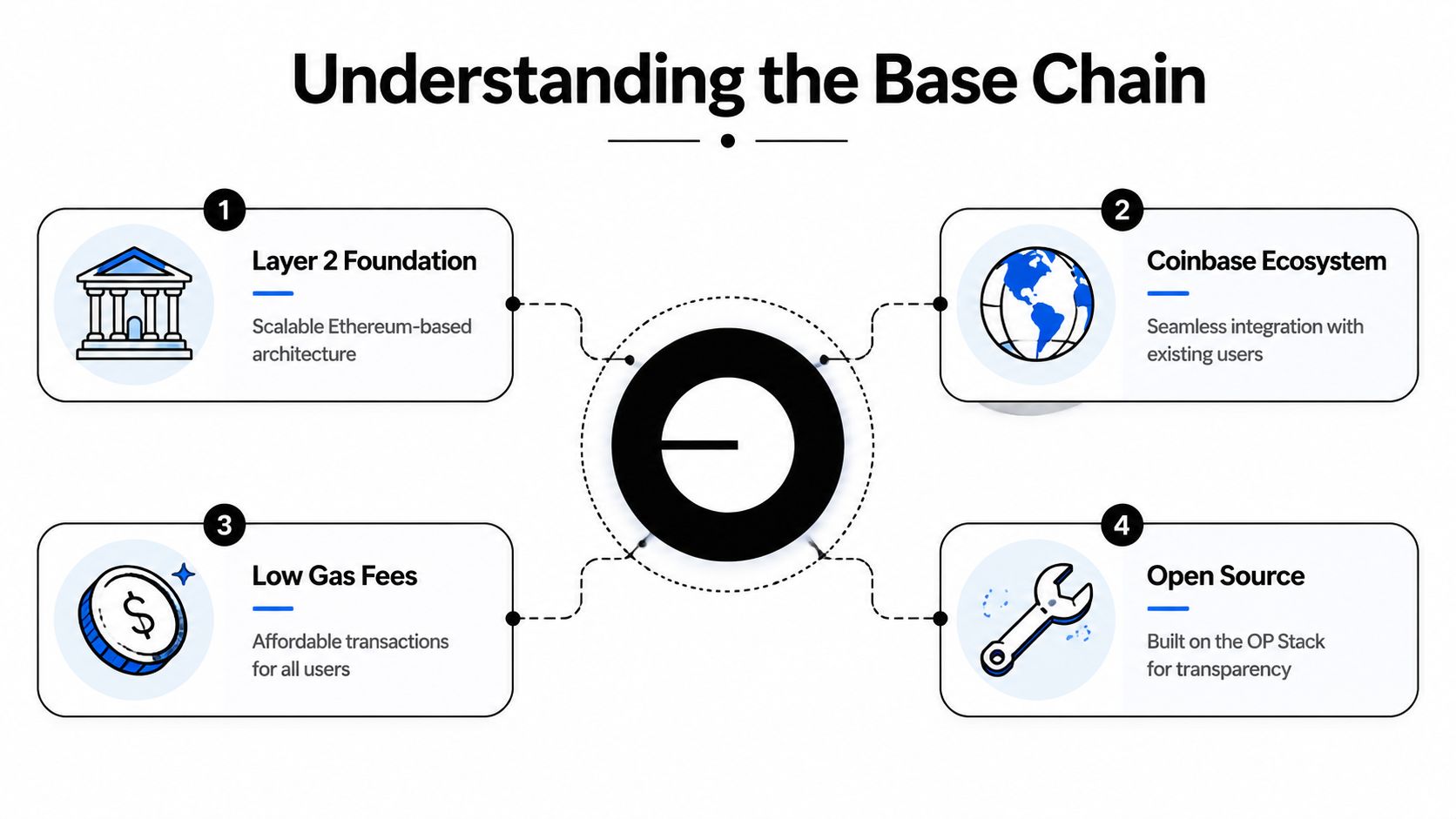
The cleanest way to think about Base chain is this: it's an express lane for Ethereum. You still end up anchored to Ethereum, but you don't force every small transaction to compete directly on Ethereum mainnet.
Base is a Layer 2. That means it handles activity away from Ethereum's main execution lane, then settles back to Ethereum for security. The practical result is familiar to anyone who's used both. Transactions feel lighter, cheaper, and more frequent without requiring a completely separate smart contract world.
How the rollup model actually helps
Base operates as an Optimistic Rollup. Instead of pushing every user action directly through Ethereum one by one, it processes transactions off-chain in batches and then posts proofs back to Ethereum. That architecture is why Base can handle approximately 8.93 million transactions daily with gas fees of just a few cents, as described in Changelly's explanation of how Base works.
That sounds technical, but the user-level consequence is straightforward:
Cheaper execution means smaller deposits still make sense.
Faster interaction means rebalancing doesn't feel punitive.
Ethereum settlement means you're not stepping into a totally disconnected environment.
If you're still getting grounded in the bigger picture, Alpha Scala has a solid plain-English explainer on what is decentralized finance. It's helpful if you understand crypto but want a cleaner mental model for what DeFi is trying to replace.
What EVM compatibility means in real life
You'll hear that Base is EVM-compatible. In practice, that means a lot of the tools and habits you already use on Ethereum carry over. Wallets, signing flows, and smart contracts don't need to be reinvented just because you moved to a different chain environment.
That matters for two groups:
User type | What EVM compatibility changes |
|---|---|
Everyday DeFi users | You can keep using familiar wallets and app patterns instead of learning a new transaction model |
Builders | Contracts and tooling port over more easily, so apps can launch faster and maintain Ethereum-like behavior |
This is one reason Base chain feels usable so quickly. It isn't asking users to learn a strange new system. It's reducing friction around a system they already understand.
The best L2s don't force a new mental model. They make old habits cheaper.
Why Base Is a Haven for Stablecoin Yield
Stablecoin yield strategies live or die on friction. If entering, exiting, and reallocating costs too much, then only large accounts can play properly. Everyone else ends up overexposed to stale positions because moving funds is too expensive.
Base chain fixes that by making active management viable. The chain's low fees and fast execution let users move stablecoins between opportunities without treating each rebalance like a serious financial event. That opens the door for tighter strategy loops, especially when rates across protocols don't stay still for long.

Why stablecoin users benefit first
Speculative traders love cheap chains, but stablecoin users often benefit more. They aren't chasing a one-off move. They're trying to preserve principal, keep liquidity, and collect yield with less operational drag.
That leads to three practical advantages on Base:
Frequent reallocation works. If one lending market weakens and another improves, you can respond without gas becoming the deciding factor.
Smaller balances stay productive. You don't need a large portfolio just to justify basic DeFi activity.
Automation becomes useful. Strategies that monitor conditions and shift capital in smaller increments can operate more naturally here.
Why Coinbase connection matters
Base also carries a trust and distribution advantage that many chains don't. It was developed by Coinbase, and that matters for onboarding stablecoin capital. A lot of users already custody, buy, or move USDC through Coinbase, so Base often feels like a continuation of their existing workflow rather than a leap into a new ecosystem.
That doesn't remove protocol risk or market risk. It does reduce operational confusion.
For treasury managers, freelancers, creators, and normal users sitting on idle stablecoins, simplicity matters more than people admit. The chain that gets funded is often the chain that's easiest to reach, easiest to trust enough to test, and easiest to use repeatedly.
Why AI-driven yield farming fits Base
AI-driven yield systems work best when they can observe, compare, and act without every action imposing a meaningful cost. That's a key connection between Base chain and automated stablecoin farming. The chain isn't just cheap in theory. It creates an environment where smaller, more frequent decisions can still be profitable after costs.
Practical rule: If your strategy needs regular movement, the chain is part of the strategy. Fees aren't separate from yield. They shape it.
On Ethereum mainnet, frequent optimization can make sense for large balances. On Base, the same behavior becomes accessible to much smaller accounts. That changes who can use active DeFi well.
How to Bridge USDC and Start on Base
Getting onto Base chain is often overcomplicated. In practice, there are two routes that matter for stablecoin users. You either bridge from another chain, or you withdraw directly from Coinbase to Base.
The simplest path depends on where your USDC sits right now.
Option one with the Base Bridge
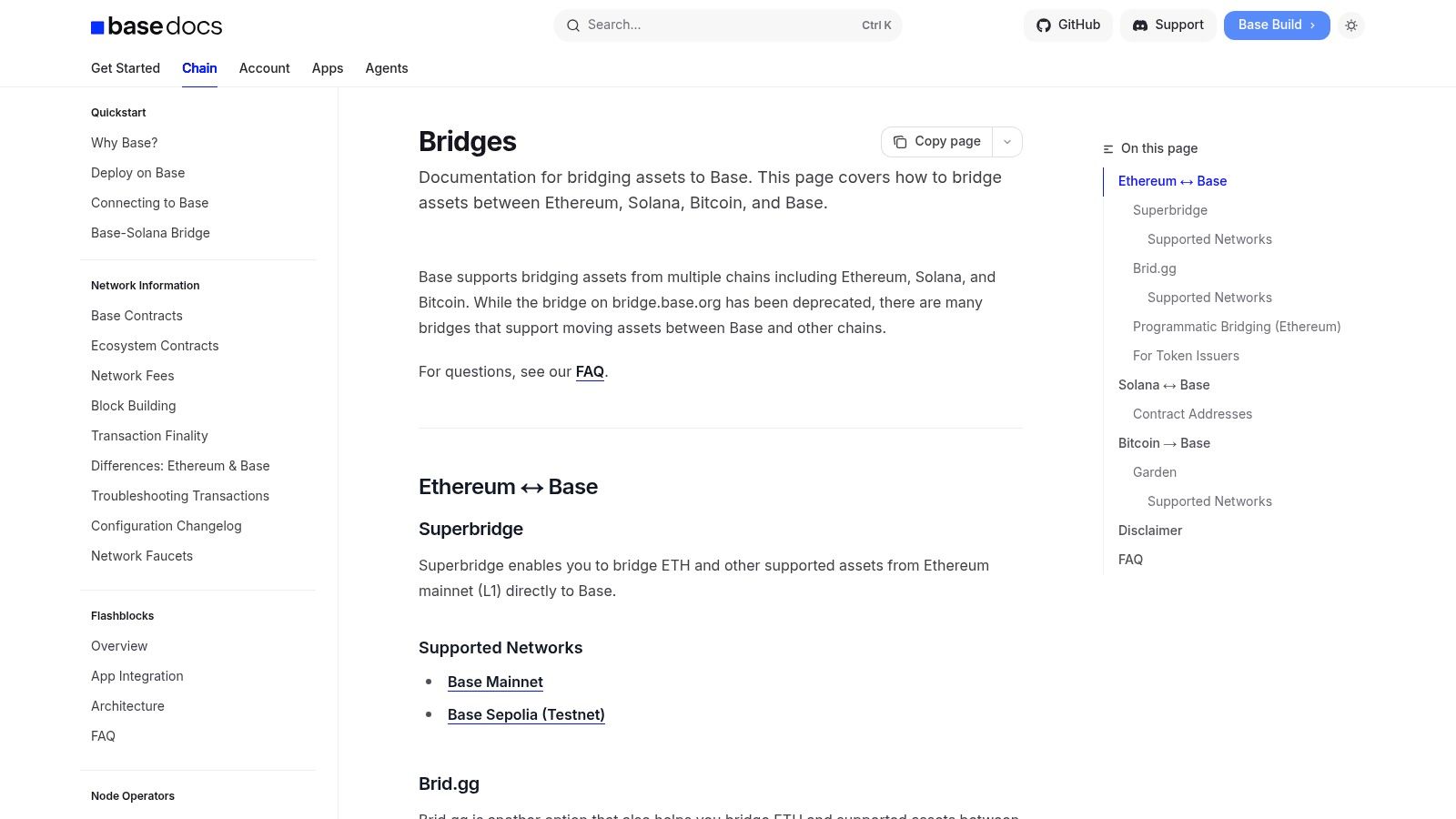
If you already hold assets on Ethereum or another supported network and you're comfortable in DeFi, the official bridge is the natural route. It keeps you inside a familiar wallet flow.
The process is simple:
Connect your wallet to the official Base bridge interface.
Choose the asset and source chain. For stablecoin users, that usually means USDC.
Review the route and confirm. Check the network carefully before signing.
Wait for settlement, then confirm the funds arrived on Base in your wallet.
If you want a more detailed walkthrough focused on stablecoin setup, this guide to USDC on Base is useful because it stays centered on the asset the majority of users want to deploy.
Option two with direct Coinbase withdrawal
For a lot of users, especially newer ones, Coinbase withdrawal is easier than bridging. If your USDC is already on Coinbase, sending directly to your Base wallet removes a layer of complexity and reduces the chance of using the wrong tool.
A few habits matter here:
Verify the network first. Make sure you're withdrawing on Base, not another network with a similar label.
Check the destination wallet carefully. Copy-paste is standard, but still verify the first and last characters.
Start small if it's your first transfer. A test transaction is boring right up until it saves you.
What to do right after funds land
Once your USDC is on Base, don't rush into the first vault with a shiny rate. Check the app, the withdrawal terms, and the actual use case. For stablecoins, boring usually beats clever.
This short video gives a visual walkthrough of the bridge flow and is helpful if you prefer to see the clicks before doing them yourself.
A practical starter checklist looks like this:
Check | Why it matters |
|---|---|
Wallet network | Prevents sending to the wrong chain |
Asset type | Confirms you're holding the stablecoin you intend to deploy |
First destination app | Reduces idle funds and rushed decisions |
Small test transfer | Catches mistakes before size magnifies them |
Getting onto Base chain isn't the hard part anymore. Choosing what to do next is where discipline matters.
Navigating Risks and Centralization on Base
A cheap chain changes user behavior. People rebalance more often, try more apps, and size up faster because mistakes only cost cents in gas. That convenience is useful for stablecoin yield. It also makes bad risk management easier.
Base does not change the core DeFi stack of risks. Smart contracts can fail. Bridges can fail. Stablecoin strategies still depend on the protocol holding your funds, the liquidity available when you enter or exit, and the incentives shaping execution on the chain. Low fees help you adjust quickly. They do not protect you from a bad venue.
Liquidity is good enough for many stablecoin strategies, but not equal to mainnet
Base works well for parking USDC in established lending markets, AMMs, and yield vaults. The trade-off shows up when liquidity gets thinner than expected or when an automated strategy has to move size during noisy conditions.
Panoptic's research comparing Base and Ethereum options markets found sharper price dislocations and richer premia on Base than on Ethereum in some contexts. For a yield farmer, the practical point is simple. Base can offer better opportunity because the market is less efficient, but that same inefficiency can raise slippage, worsen exits, and make quoted yields look cleaner than realized returns.
That matters if you're using automation. An AI system reallocating stablecoins on Base needs chain-specific guardrails. It should check liquidity depth, expected execution cost, and whether the extra yield is real after routing and market impact. A strategy that looks great on a dashboard can still underperform once trades hit thinner pools.
For a closer look at where that opportunity and risk come from, this guide to investing across the Base ecosystem is a useful companion.
Centralization is still part of the trade
Base is easier to use partly because more of the system is coordinated than many crypto users prefer. That does not make it unusable. It does mean serious users should price that into their decisions.
The practical question for stablecoin deployment is whether the chain's current trust assumptions are acceptable for the size and duration of your position. For many users, the answer is yes for active cash management, especially when the benefit is cheap rebalancing and broad app support. For treasury-sized capital or fully trust-minimized mandates, the answer may be different.
This is the fundamental trade-off. Base gives you speed, low transaction costs, and a strong app layer. In exchange, you accept a stack that is still maturing and governance that is more managed than Ethereum mainnet.
What usually works on Base
Base is strongest when the strategy is boring in the right way.
Deploying stablecoins into established protocols with simple mechanics and clear sources of yield
Rebalancing often, but with limits so gas savings do not turn into overtrading
Using automation that respects execution quality instead of chasing the highest displayed APY
Keeping position sizing realistic for the depth of the market you're using
What causes problems
The losses usually come from behavior, not from the chain name itself.
Chasing yield across unfamiliar apps without reading contract risk or withdrawal conditions
Assuming every pool can handle size because the UI looks polished
Ignoring slippage and MEV exposure in automated reallocations
Treating Base like Ethereum mainnet when liquidity and market structure are clearly different
For stablecoin yield, Base is one of the better places to operate right now because low fees make active management viable. The edge comes from using that flexibility with discipline. Cheap execution is an advantage only if the system making decisions knows when not to move.
Putting It All Together with Yield Seeker
Here's what the full Base chain workflow looks like when you care about stablecoin yield and not just chain theory.
You move USDC onto Base. You keep some gas in the wallet. Then instead of manually checking multiple DeFi apps every day, comparing rates, and deciding whether a rebalance is worth the effort, you use a system that can monitor conditions continuously and act when the move makes sense.

What the workflow looks like in practice
The appeal isn't mystery. It's reduction of manual overhead.
A stablecoin user on Base usually has the same recurring problems:
Problem | Manual approach | Automated approach |
|---|---|---|
Rates move across protocols | Check dashboards repeatedly | System monitors opportunities continuously |
Rebalancing is annoying | Decide if moving is worth the effort | Capital can be reallocated when conditions justify it |
Fragmented information | Compare apps one by one | Signals get consolidated into one decision flow |
That's where a tool like Yield Seeker fits. It lets users deposit USDC on Base and have an AI agent monitor and allocate capital across DeFi protocols in real time, with funds remaining accessible and no lockups or withdrawal fees. On Base, that design makes practical sense because the chain's low transaction cost allows more responsive allocation without turning every move into a drag on returns.
Why Base makes this model viable
This type of product works better on Base than on expensive chains for one simple reason. The chain supports operational frequency.
If the software needs to evaluate conditions often and shift capital when opportunities change, low-cost execution is part of the product's infrastructure. Without that, automation becomes either too conservative to matter or too expensive to justify.
A useful companion read here is Base ecosystem investing, especially if you want a wider view of how stablecoin strategies fit into the broader network rather than treating yield as an isolated tactic.
Good automation doesn't replace judgment. It replaces repetitive monitoring and expensive indecision.
A sensible way to start
If you're trying this setup for the first time, keep it boring:
Start with an amount you're comfortable testing with so you can learn the flow without pressure.
Watch how funds move and where they sit before increasing size.
Treat the first deposit as operational training, not a final strategy decision.
That mindset is what makes Base chain useful for real people. It lowers the cost of getting started, lowers the cost of adjusting, and lowers the penalty for learning by doing.
The Future of Your DeFi Strategy Is on Base
You bridge USDC, make a few test deposits, rebalance once or twice, and realize something important. On Base, routine yield management is cheap enough to do properly.
That changes the shape of a DeFi strategy. Stablecoin yield stops being a passive decision you set once and forget. It becomes a process you can run: compare opportunities, adjust allocation, pull funds when risk changes, and keep more of the return instead of handing it to gas.
Base still has trade-offs, and serious users should treat them that way. The chain has made real progress on decentralization, but it is not the same thing as fully neutral, fully mature infrastructure. Sequencing, operational dependencies, and ecosystem concentration still matter. If you're deploying meaningful size, those details are part of the strategy, not background noise.
For stablecoin users, the practical case is still strong. Base gives you a chain where frequent decisions are affordable, automation is viable, and smaller balances are not immediately handicapped by transaction costs. That matters even more if you're using software to monitor rates and reposition capital, because an AI-driven approach only works when execution is cheap enough to support regular action.
That is why Base fits the Yield Seeker model so well. Deposit USDC on Base, let the agent monitor opportunities across the chain, and keep funds accessible while the system handles the repetitive work. The point is not to chase every basis point. The point is to run a disciplined yield process in an environment where the mechanics make sense.
If you've been waiting for a chain that makes stablecoin farming feel usable instead of theoretical, Base is a sensible place to start. Start small, verify the flow with your own wallet, and scale only after the process feels boring. In DeFi, boring usually means the setup is working.
If you want a hands-off way to put that into practice, Yield Seeker lets you deposit USDC on Base and use an AI agent to monitor and allocate across DeFi opportunities while keeping your funds accessible.