Back to Blog
7 Best Investment Platforms for Beginners in 2025
Discover the 7 best investment platforms for beginners. Compare fees, features, and ease of use to find the right brokerage and start your portfolio today.
Oct 22, 2025
generated

Investing for the first time can feel overwhelming, with countless platforms all promising the best start. The truth is, the 'best' platform is the one that aligns with your specific goals, budget, and learning style. Are you looking for a hands-off, automated approach, or do you want to actively pick your own stocks? Do you need extensive educational resources, or is a simple, mobile-first interface your top priority? This guide cuts through the noise to help you find the right fit.
We will provide a detailed breakdown of the 7 best investment platforms for beginners, showcasing their unique strengths and ideal user profiles. We cover everything from zero-commission trades and fractional shares to automated portfolios and access to human advisors. Before diving into platform specifics, it's wise to consider comprehensive investment planning with optimal tax implications to set yourself up for long-term success.
Each review includes screenshots and direct links to get you started quickly. By the end of this article, you'll have a clear understanding of which platform is the perfect launchpad for your journey toward building wealth, whether you are a tech-savvy investor or a busy professional seeking reliable passive income.
1. Fidelity Investments: The All-in-One Powerhouse for New Investors
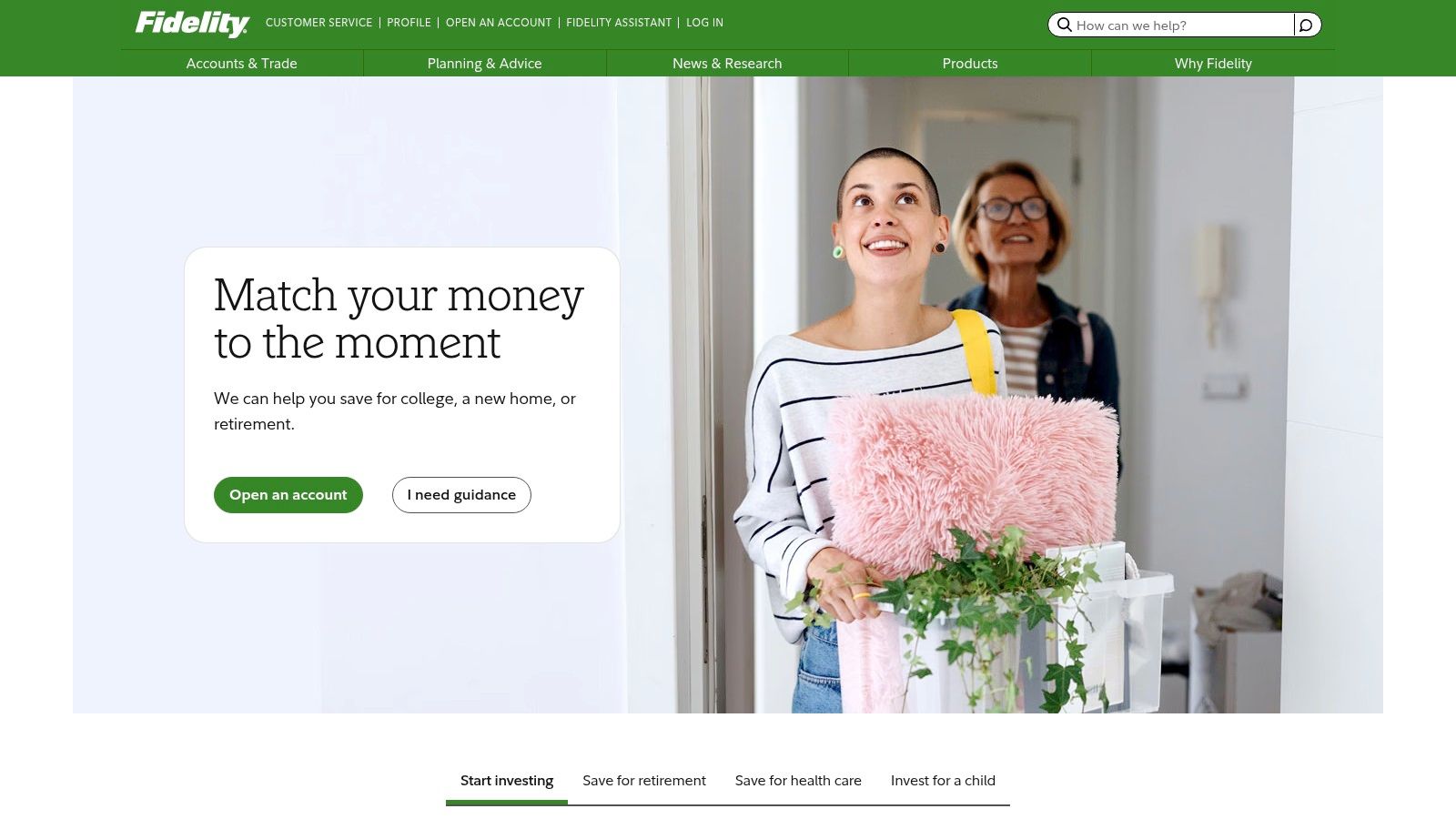
Fidelity Investments solidifies its place as one of the best investment platforms for beginners by offering a comprehensive suite that scales with you. It masterfully removes the initial hurdles of investing by eliminating account minimums and commissions on U.S. stock and ETF trades. This combination of accessibility and powerful features makes it an ideal starting point for anyone new to building wealth.
Fidelity’s standout offering is its suite of ZERO expense ratio index funds, such as the Fidelity ZERO Total Market Index Fund (FZROX). These funds allow you to gain broad market exposure without paying any management fees, a significant advantage for long-term growth.
Why It Stands Out
What truly sets Fidelity apart is the blend of digital convenience with human support. While its mobile app and website are robust and user-friendly, the company maintains a vast network of physical branches. This provides a safety net for beginners who may want in-person guidance.
The platform also champions fractional shares, marketed as "Stocks by the Slice." This feature lets you invest with as little as $1, making it possible to own pieces of high-priced stocks like Amazon or NVIDIA without needing thousands of dollars.
Key Features and Costs
Here’s a breakdown of what Fidelity offers for new investors:
Feature | Details & Cost |
|---|---|
Account Minimum | $0 |
Stock & ETF Trades | $0 commission for U.S. listed securities |
Options Contracts | $0.65 per contract |
Fractional Shares | Yes, invest with as little as $1 |
Mutual Funds | Over 3,300 no-transaction-fee (NTF) funds |
Unique Offerings | Fidelity ZERO expense ratio index funds |
Pros and Cons
Pros:
Extensive research tools and educational content.
No-fee index funds and fractional shares make diversification cheap and easy.
Strong customer support with both 24/7 phone service and physical branches.
Cons:
The platform can feel overwhelming at first due to its sheer number of features.
While stock trades are free, fees for options and some mutual funds can apply.
Website: https://www.fidelity.com
2. Charles Schwab: A Trusted Broker with Modern Features
Charles Schwab stands as a pillar in the investment world, making it one of the best investment platforms for beginners looking for a blend of tradition, value, and modern technology. It has built a reputation on reliability and customer service while evolving to meet the needs of a new generation of investors with $0 commission online U.S. stock and ETF trades and no account minimums.
A key attraction for beginners is Schwab's "Stock Slices" program. This feature permits investing in any S&P 500 company with as little as $5, providing an affordable entry point to owning fractional shares of America's largest and most successful corporations. This democratizes access to high-priced stocks, allowing for easy diversification from day one.
Why It Stands Out
Schwab distinguishes itself by offering a clear path for growth. You can start with a simple self-directed account and later graduate to more sophisticated tools or even automated investing. Its Schwab Intelligent Portfolios is a standout robo-advisor service that carries no advisory fees, making it an excellent option for hands-off investors.
Furthermore, for those who want personalized advice, the Schwab Intelligent Portfolios Premium service provides unlimited one-on-one guidance from a CERTIFIED FINANCIAL PLANNER™ professional for a reasonable subscription fee. This hybrid approach allows beginners to get human support as their financial situation becomes more complex, offering a scalable solution that many competitors lack.
Key Features and Costs
Here’s a breakdown of what Charles Schwab offers for new investors:
Feature | Details & Cost |
|---|---|
Account Minimum | $0 |
Stock & ETF Trades | $0 commission for U.S. listed securities |
Options Contracts | $0.65 per contract |
Fractional Shares | Yes, "Stock Slices" from $5 for S&P 500 companies |
Robo-Advisor | Schwab Intelligent Portfolios (no advisory fees) |
Unique Offerings | Premium option for access to a human CFP® professional |
Pros and Cons
Pros:
Extensive educational resources, research tools, and excellent customer support.
Strong product lineup, including $0 online trades for fixed income and Treasuries.
Option to add human financial planning support via a premium subscription.
Cons:
Fractional shares are limited to S&P 500 stocks, not all available securities.
The robo-advisor maintains a significant cash allocation, which could potentially lower returns compared to fully invested portfolios.
Website: https://www.schwab.com
3. Vanguard: The Gold Standard for Low-Cost, Long-Term Investing
Vanguard has built its reputation on a simple yet powerful philosophy: keeping costs low to maximize investor returns. This makes it one of the best investment platforms for beginners who are focused on a disciplined, buy-and-hold strategy. The platform is synonymous with low-cost index funds and ETFs, providing a straightforward path to building a diversified portfolio without the complexity found on other platforms.
Vanguard pioneered the low-cost investing model, and its average expense ratios remain among the lowest in the industry. For beginners, this means more of your money goes toward your investments rather than being eroded by fees over time, which is crucial for long-term wealth compounding.

Why It Stands Out
Vanguard stands out for its unwavering commitment to the individual investor. While its platform may not have the flashiest trading tools, its strength lies in its simplicity and focus on long-term goals. The platform offers a clear pathway for growth, with advisory services like Vanguard Digital Advisor and Personal Advisor. This allows you to start with an automated portfolio and later graduate to working with a human advisor as your needs become more complex. For those interested in digital wealth management, you can explore more about these platforms to see how they compare.
The company's structure as a client-owned entity means its interests are aligned with its investors. This translates to a stable product lineup and a consistent focus on reducing fees, creating a trustworthy environment for new investors to begin their journey.
Key Features and Costs
Here’s a breakdown of what Vanguard offers for new investors:
Feature | Details & Cost |
|---|---|
Account Minimum | $0 for brokerage accounts |
Stock & ETF Trades | $0 commission for online trades |
Options Contracts | $1 per contract |
Mutual Funds | Large selection of no-transaction-fee (NTF) funds |
Advisory Services | Digital Advisor (0.20% AUM); Personal Advisor (0.35%–0.40% AUM) |
Unique Offerings | Extremely low expense ratios on proprietary funds and ETFs |
Pros and Cons
Pros:
Industry leader in low-cost investing, ideal for passive, long-term strategies.
Simple and straightforward product lineup focused on diversification.
Advisory tiers provide a scalable path from robo-advisor to human financial planning.
Cons:
The website and mobile app can feel dated and less intuitive than competitors.
Some accounts may incur service fees if certain balance minimums are not met.
Website: https://investor.vanguard.com
4. Robinhood: The App-First Gateway to Investing
Robinhood has cemented its reputation as one of the best investment platforms for beginners by pioneering the commission-free trading model and delivering an exceptionally intuitive, mobile-first experience. It excels at breaking down traditional barriers to entry, making it incredibly simple for someone with no prior experience to start buying and selling stocks, ETFs, and even cryptocurrencies right from their phone.
The platform's design philosophy is centered on simplicity and accessibility. It eliminates account minimums and offers fractional shares starting from just $1, allowing new investors to build a diversified portfolio with very little capital. This makes owning a piece of expensive tech stocks just as easy as buying a share of a more affordable company.

Why It Stands Out
Robinhood's standout feature is its powerful IRA match program, particularly for its Robinhood Gold subscribers. This program offers a compelling incentive for retirement saving by matching a percentage of contributions, effectively boosting your savings rate. This, combined with its seamless integration of stock, ETF, and crypto trading in a single app, creates a uniquely modern and unified investing ecosystem.
The user experience is undeniably clean and straightforward, stripping away the complex charts and jargon that can intimidate newcomers. For those interested in exploring beyond simple stock picking, Robinhood also offers managed "Strategies" and is steadily expanding its desktop platform to provide more robust tools.
Key Features and Costs
Here’s a breakdown of what Robinhood offers for new investors:
Feature | Details & Cost |
|---|---|
Account Minimum | $0 |
Stock & ETF Trades | $0 commission |
Options Contracts | $0 commission |
Fractional Shares | Yes, invest with as little as $1 |
Crypto Trading | Yes, available alongside traditional securities |
Unique Offerings | IRA with a 1% match (up to 3% for Gold members); Robinhood Gold subscription for enhanced features |
Pros and Cons
Pros:
Extremely clean and intuitive user interface, ideal for beginners.
Generous IRA match program can significantly accelerate retirement savings.
Fractional shares and integrated crypto trading provide broad market access. For more insights on this, you can learn more about the best investment apps for beginners.
Cons:
The most powerful features, like the highest IRA match, are locked behind a paid Robinhood Gold subscription.
Research tools and educational resources are less comprehensive than those offered by full-service brokers.
Website: https://robinhood.com
5. SoFi Invest: The All-in-One Financial Hub for Newcomers
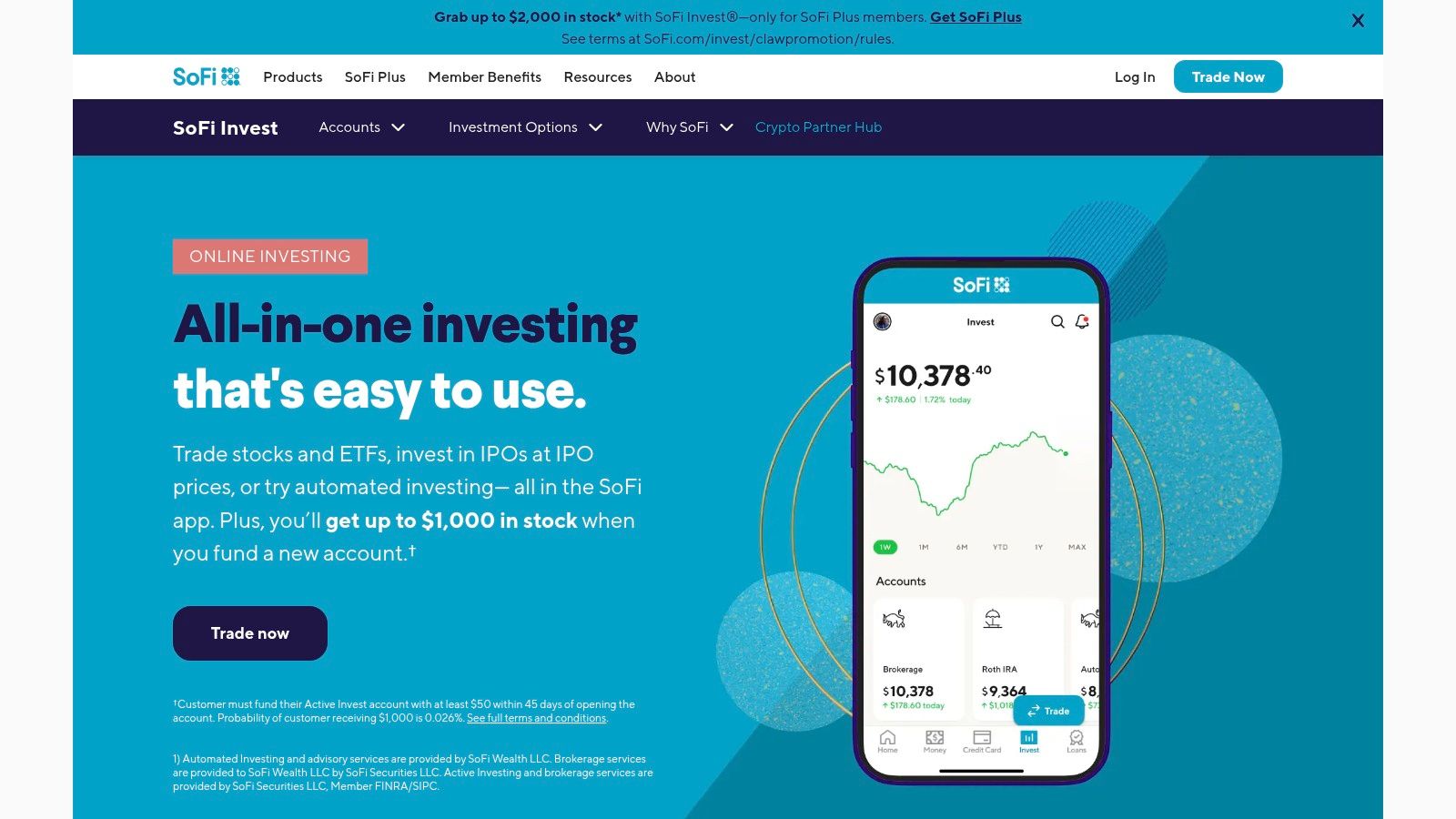
SoFi Invest positions itself as one of the best investment platforms for beginners by integrating investing, banking, and lending into a single, user-friendly app. It simplifies the entry into financial markets with $0 commission stock and ETF trades, along with the ability to start with small amounts. This all-in-one approach is perfect for those looking to consolidate their financial life while taking their first steps in building wealth.
A key draw for SoFi is its hybrid model, offering both active (self-directed) trading and an automated investing (robo-advisor) service. This allows you to start by picking your own stocks and ETFs and later transition to a professionally managed portfolio as your goals and confidence evolve.
Why It Stands Out
What makes SoFi Invest unique is its seamless blend of active and passive investing within a broader financial ecosystem. New investors can start with "Stock Bits," SoFi’s version of fractional shares, allowing them to own a piece of popular companies for as little as $5.
The platform's standout feature is its easy transition from hands-on trading to a goal-based automated portfolio. Furthermore, SoFi provides access to certified financial planners at no extra cost, offering a human touch that is invaluable for beginners seeking guidance on their financial journey.
Key Features and Costs
Here’s a breakdown of what SoFi Invest offers for new investors:
Feature | Details & Cost |
|---|---|
Account Minimum | $0 for active investing, $1 for automated |
Stock & ETF Trades | $0 commission |
Automated Portfolios | No advisory fees with a SoFi Checking & Savings direct deposit, otherwise 0.25% per year ($1/month minimum) |
Fractional Shares | Yes, "Stock Bits" starting at $5 |
Human Advisors | Yes, access to financial planners included |
Unique Offerings | Integrated app for banking, loans, and investing |
Pros and Cons
Pros:
Extremely beginner-friendly interface and onboarding process.
Fractional shares make it easy to start investing with very little money.
Smoothly transitions from self-directed trading to a managed robo-advisor.
Access to human financial advisors is a significant benefit for newcomers.
Cons:
Robo-advisor portfolios may use ETFs with slightly higher expense ratios than competitors.
Limited advanced tools for more experienced traders.
Outgoing ACAT transfer fee of $100.
Website: https://www.sofi.com/invest
6. E*TRADE: A Comprehensive Platform That Grows With You
E*TRADE, now part of Morgan Stanley, establishes itself as one of the best investment platforms for beginners by offering a powerful, feature-rich environment that scales as your skills advance. It provides an excellent entry point with $0 account minimums and commission-free online trades for U.S. stocks, ETFs, and even mutual funds. This accessible pricing structure ensures that new investors can start building their portfolios without worrying about high initial costs.
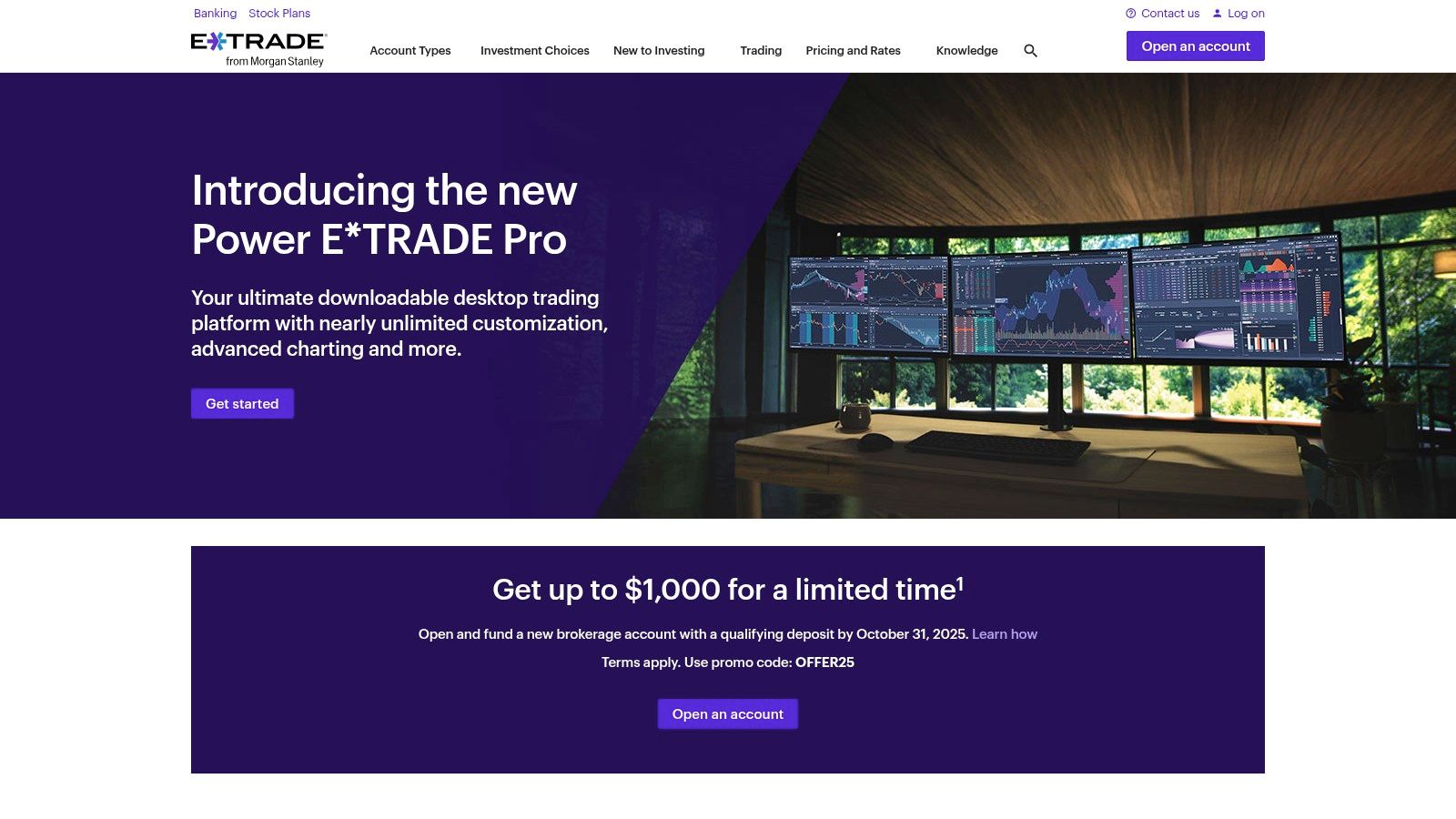
The platform is known for its two distinct interfaces: the standard ETRADE web platform, which is great for beginners, and the more advanced Power ETRADE, perfect for when you are ready to tackle more complex trading strategies. This dual-platform approach provides a clear and supportive learning path.
Why It Stands Out
What makes E*TRADE unique is its integration with Morgan Stanley, giving users access to high-quality, institutional-grade research and analysis that is typically reserved for high-net-worth clients. This added insight can be invaluable for beginners trying to make informed decisions. Furthermore, its educational resources, including articles, videos, and webinars, are top-notch and designed to guide users from basic concepts to sophisticated trading techniques.
For those who prefer a hands-off approach, E*TRADE offers Core Portfolios, a robo-advisor service that builds and manages a diversified portfolio for you. With a reasonable minimum of $500, it's a great way to get started with automated investing.
Key Features and Costs
Here’s a breakdown of what E*TRADE offers new investors:
Feature | Details & Cost |
|---|---|
Account Minimum | $0 |
Stock & ETF Trades | $0 commission for U.S. listed securities |
Options Contracts | $0 commission, $0.65 per contract fee |
Mutual Funds | $0 commission for online trades |
Robo-Advisor | Core Portfolios: 0.30% annual advisory fee ($500 minimum) |
Unique Offerings | Power E*TRADE platform, access to Morgan Stanley research and IPOs |
Pros and Cons
Pros:
Two excellent platforms that cater to both beginners and advanced traders.
Access to high-quality Morgan Stanley research and market insights.
Strong educational content and frequent promotions for new accounts.
Cons:
The robo-advisor's 0.30% management fee is higher than some competitors.
Per-contract fees for options trades still apply.
Website: https://us.etrade.com
7. M1 Finance: The Automated Portfolio Builder for Modern Investors
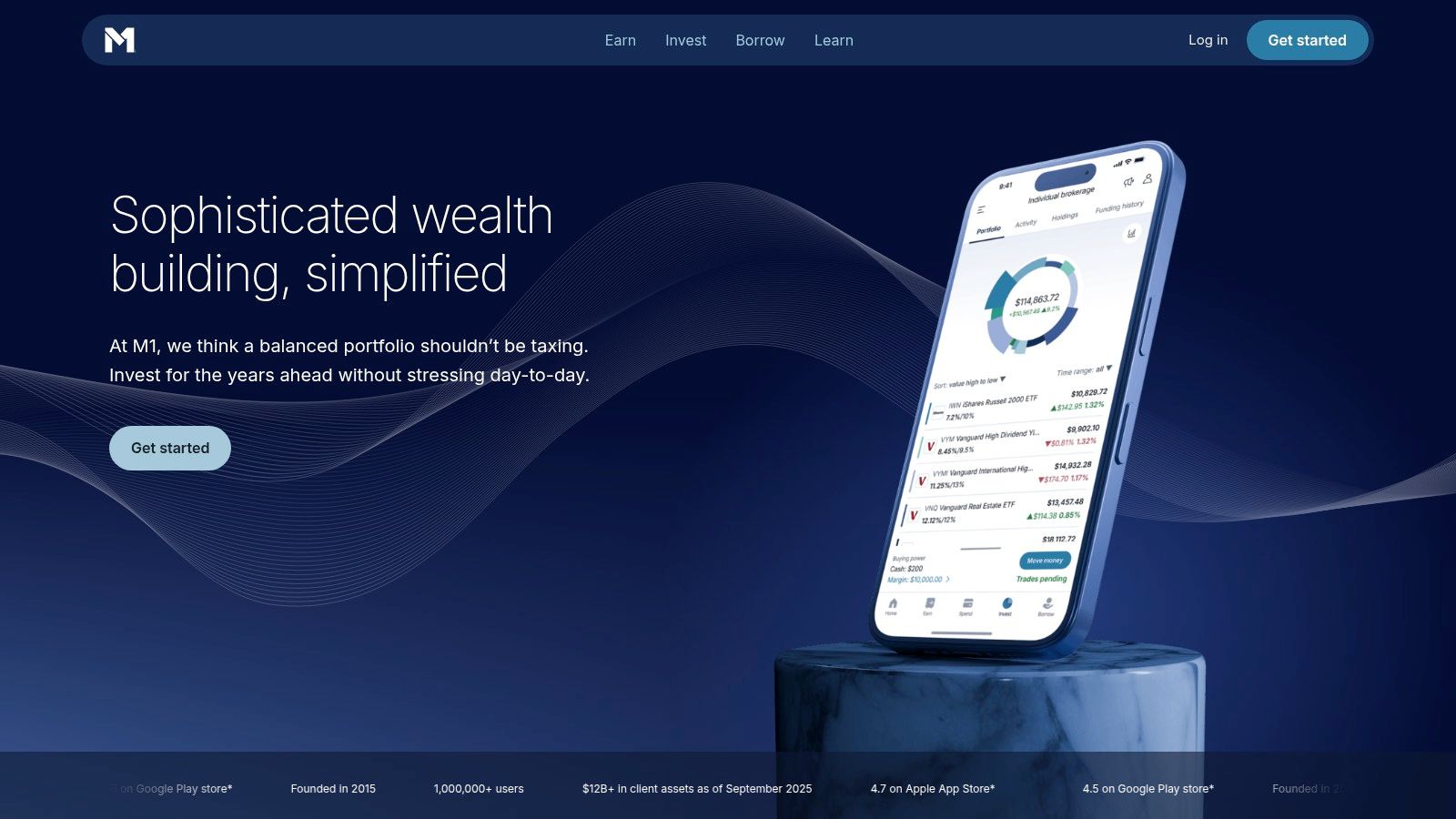
M1 Finance carves out a unique niche, blending the control of self-directed investing with the ease of a robo-advisor. It's one of the best investment platforms for beginners who want a "set it and forget it" strategy without sacrificing customization. The platform is built around its signature "Pies," which are customizable portfolios of stocks and ETFs that you design.
The core concept is simple: you create your ideal investment Pie, fund your account, and M1’s automation handles the rest. This system uses fractional shares to ensure every dollar is invested according to your target allocations, making it perfect for those who prefer a long-term, goal-based approach to building wealth. For those interested in automation, you can explore more about automated investment platforms here.
Why It Stands Out
What makes M1 Finance truly distinct is its dynamic rebalancing feature. Instead of selling assets to rebalance, which can create taxable events, M1 automatically directs new cash deposits toward the underweight slices of your Pie. This intelligent automation helps your portfolio stay on track with minimal effort and tax friction.
This hands-off approach encourages disciplined, long-term investing over reactive, emotional trading. It’s an excellent educational tool, as building your Pies teaches you the fundamentals of asset allocation and diversification in a practical, visual way.
Key Features and Costs
Here’s a breakdown of what M1 Finance offers new investors:
Feature | Details & Cost |
|---|---|
Account Minimum | $100 to start investing |
Stock & ETF Trades | $0 commission |
Platform Fee | $3/month (waived for accounts with $10,000+ total value) |
Fractional Shares | Yes, integral to the Pie-based system |
Mutual Funds | Not available; platform focuses on stocks and ETFs |
Unique Offerings | Customizable "Pies" with Auto-Invest and dynamic rebalancing |
Pros and Cons
Pros:
Excellent automation for long-term, passive investing.
Highly customizable portfolios teach allocation concepts visually.
Dynamic rebalancing is a tax-efficient way to maintain your strategy.
Cons:
The $3/month platform fee can be a drawback for very small accounts.
Limited tools for active traders; lacks features like advanced charting.
Website: https://m1.com
Top 7 Beginner Investment Platforms: Feature Comparison
Provider | 🔄 Implementation complexity | ⚡ Resource requirements | 📊 Expected outcomes | 💡 Ideal use cases | ⭐ Key advantages |
|---|---|---|---|---|---|
Fidelity Investments | Moderate — full-featured platform with many tools | Low — $0 trades, fractional from $1, no minimums | Strong low-cost, diversified portfolios & research-driven decisions | Beginners to advanced investors wanting in-person support and low-cost funds | ⭐ Broad product lineup; ZERO funds; fractional shares |
Charles Schwab | Moderate — robust platforms and robo+human options | Low — $0 trades, Stock Slices from $5, optional Premium CFP | Reliable diversified portfolios with optional human planning | Beginners seeking simple guidance and S&P 500 fractional access | ⭐ Clear pricing; intelligent robo and strong support |
Vanguard | Low — simple, buy-and-hold oriented experience | Low — $0 trades, industry-low expense ratios; advisory tiers fee-based | Very cost-efficient long-term index performance | Long-term passive investors focused on low-cost funds | ⭐ Market-leading low expense ratios; straightforward lineup |
Robinhood | Low — app-first, streamlined experience | Very low — $0 trades, fractional from $1; Gold for enhanced perks | Fast, accessible market access; less depth in research | New investors wanting simple app, crypto access, and fast trades | ⭐ Intuitive UX; crypto + IRA match options |
SoFi Invest | Low — combined banking + investing app with robo & advisors | Low — $0 trades; robo ~0.25% AUM; human advisor access | Goal-based automated portfolios with easy onboarding | First-time investors wanting banking integration and optional human help | ⭐ Integrated financial products; competitive robo fee |
E*TRADE (Morgan Stanley) | High — two advanced platforms (Web & Power) | Moderate — $0 trades, robo 0.30% AUM, $500 robo min | Comprehensive investing capabilities and institutional research access | Traders and investors scaling toward advanced research and services | ⭐ Powerful trading tools; Morgan Stanley research & IPO access |
M1 Finance | Low — hybrid automated/self-directed "Pie" system | Low–Moderate — commission-free fractional, possible $3/mo fee unless exempt | Set-and-forget diversified portfolios with automatic rebalancing | Hands-off, goal-based investors who want customization + automation | ⭐ Customizable Pies; Auto-Invest & dynamic rebalancing |
Your Next Step: From Choosing a Platform to Making Your First Investment
Embarking on your investment journey is a significant step toward building long-term wealth, and choosing your first platform is the gateway. We've explored some of the best investment platforms for beginners, from established giants to innovative disruptors, each offering a unique pathway into the market. The sheer volume of options can feel overwhelming, but the key is to move from analysis to action.
Your ideal platform isn't about finding a single "perfect" choice but about finding the one that best aligns with your current goals, learning style, and financial situation. Remember, the platform you start with doesn't have to be the one you use forever. The most critical step is simply to begin.
How to Choose the Right Platform for You
To crystallize your decision, consider these final guiding questions. Answering them will help you filter through the options we've discussed and select the platform that feels like the right fit for your first move.
What is my primary investment goal? If you're focused on long-term retirement, a platform with strong IRA options like Fidelity or Vanguard might be best. For building a custom portfolio with automated rebalancing, M1 Finance is a powerful contender.
How much guidance do I need? If you value extensive educational resources and award-winning customer support, Charles Schwab and E*TRADE provide a robust framework for learning as you go.
What is my preferred user experience? For a streamlined, mobile-first interface that makes trading feel intuitive and accessible, Robinhood and SoFi Invest excel. Their designs prioritize simplicity, which can be a huge advantage when you're just starting out.
What are my budget constraints? While all the platforms listed are known for low fees, pay close attention to account minimums and any costs associated with specific funds or services you might use. Most offer $0 minimums to start, removing a major barrier to entry.
Taking Action: Your First Investment
Once you've selected a platform and opened your account, the next step is making that first investment. Don't let the pursuit of the "perfect" stock or fund paralyze you. A fantastic starting point for most beginners is a low-cost, diversified index fund or ETF, such as one that tracks the S&P 500.
This approach allows you to instantly own a small piece of hundreds of the largest U.S. companies, spreading your risk and aligning your growth with the broader market. It’s a simple, effective, and time-tested strategy for building wealth. The most important lesson is to cultivate a consistent habit. Start with an amount you're comfortable with, commit to regular contributions, and let the incredible power of compounding begin to work its magic. Your future self will thank you for the progress you make today.
Ready to diversify beyond traditional stocks and explore the high-yield potential of digital assets? Yield Seeker simplifies decentralized finance (DeFi) by using advanced AI to find and manage the best yields on stablecoins like USDC for you. Start earning passive income with a platform designed for both security and simplicity by visiting Yield Seeker today.