

Back to Blog
8 Digital Asset Management Best Practices for 2025
Unlock efficiency with our 2025 guide to digital asset management best practices. Learn 8 expert strategies for organization, security, and optimization.
Oct 9, 2025
generated
In today's fast-paced operational environment, digital assets are more than just files; they are the lifeblood of your brand's marketing, sales, and communication efforts. From high-resolution images and videos to crucial brand documents and 3D models, the sheer volume can quickly become overwhelming. Without a robust strategy, organizations face a chaotic reality of wasted time, duplicated efforts, brand inconsistencies, and significant security risks. The solution lies in adopting proven digital asset management best practices.
This guide moves beyond the basics, offering a detailed roadmap of eight essential strategies that transform digital chaos into a streamlined, secure, and highly efficient system. We'll explore everything from foundational taxonomy and security protocols to advanced workflow automation and continuous improvement. We provide actionable steps and real-world examples to help you build a DAM strategy that not only works but excels. For a deeper dive into the core concept and benefits, explore this comprehensive guide to Digital Asset Management systems before proceeding.
Each point in this listicle is designed to give you a concrete framework for implementation. You will learn how to:
Organize assets with a consistent taxonomy and metadata strategy.
Secure your library with role-based access controls.
Standardize operations through clear naming conventions and version control.
Automate workflows and integrate with your existing technology stack.
For those managing financial digital assets, optimizing yields securely is just as critical. While this guide focuses on creative and operational assets, platforms like Yield Seeker apply similar principles of security, automation, and efficiency to help you maximize returns on stablecoin holdings, turning complexity into effortless growth. Let's begin building a more powerful and organized asset ecosystem.
1. Establish a Consistent Taxonomy and Metadata Strategy
A robust taxonomy and metadata strategy is the bedrock of any successful digital asset management system. This foundational practice involves creating a standardized, controlled system for categorizing, tagging, and describing your assets. Think of it as building a universal language for your organization's content, ensuring that every file, from a product image to a marketing video, can be easily searched, filtered, and retrieved. Without it, your digital asset library becomes a chaotic digital junkyard where valuable content goes to get lost.
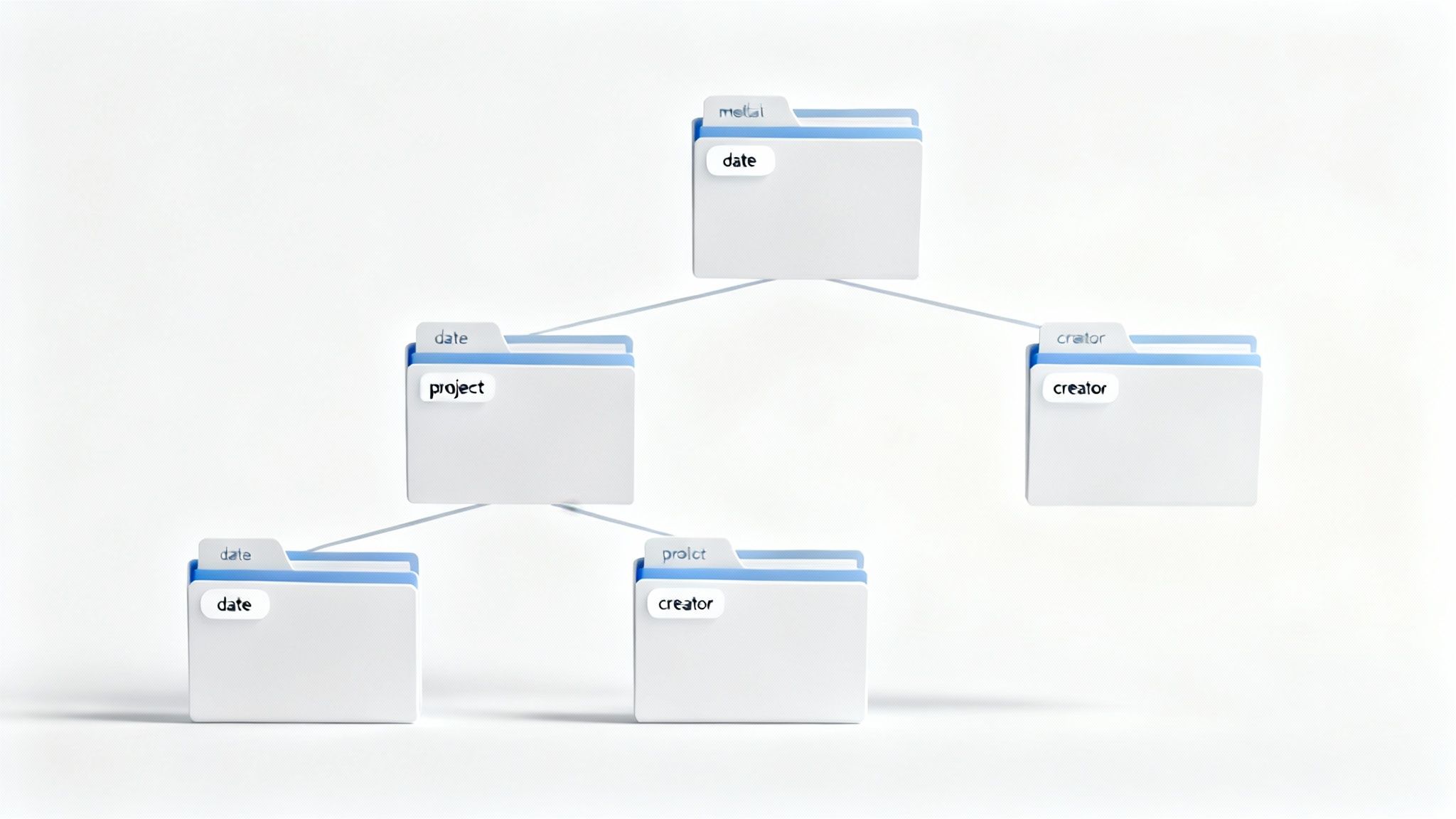
This structured approach transforms a simple collection of files into a strategic, searchable resource. It organizes assets according to predefined categories, keywords, and attributes that align directly with your business goals and workflows, making it one of the most critical digital asset management best practices to implement from day one.
How It Works in Practice
Leading organizations demonstrate the power of a well-defined taxonomy. Nike, for example, implemented a global taxonomy to standardize product imagery across more than 30 markets, ensuring brand consistency and streamlining marketing efforts. Similarly, The Metropolitan Museum of Art created a comprehensive controlled vocabulary to catalog its 1.5 million art objects, making its vast collection accessible to researchers and the public. These examples show that whether you're managing product SKUs or priceless artifacts, a consistent framework is non-negotiable for scalability and efficiency.
Actionable Implementation Tips
Getting started doesn't have to be overwhelming. A phased approach is often the most effective way to build a sustainable system.
Start Small and Scale: Begin with 5-10 essential metadata fields (e.g., Creator, Date Created, Asset Type, Campaign, Usage Rights) and expand gradually as your needs evolve.
Involve All Stakeholders: Collaborate with marketing, legal, sales, and creative teams to develop a taxonomy that serves everyone. Their input ensures the structure is practical and aligns with real-world workflows.
Leverage Existing Standards: Don't reinvent the wheel. Use established standards like Dublin Core or IPTC as a solid foundation for your metadata schema.
Define Your Rules: Create a metadata dictionary or style guide that clearly defines each field, its purpose, and the correct format for entries. Designate fields as either mandatory or optional to enforce data quality.
Embrace Automation: Use AI-powered auto-tagging features within your DAM system to speed up the initial process of tagging your existing asset library, saving hundreds of hours of manual work.
Schedule Regular Reviews: A taxonomy is a living system. Schedule quarterly reviews to refine categories, update keywords, and ensure it continues to meet your organization's changing needs.
2. Implement Role-Based Access Control (RBAC) and Permissions
Securing your digital library is just as crucial as organizing it. Role-Based Access Control (RBAC) establishes a critical security framework that defines precisely who can view, edit, download, share, and delete assets. This practice is about granting access based on a user's role, department, and project needs, ensuring that valuable content is only accessible to those with legitimate reasons to use it. It transforms your DAM from an open-for-all folder into a secure, controlled environment.

Implementing RBAC is fundamental to mitigating risk, protecting sensitive assets, maintaining version control, and ensuring brand consistency. This granular control is a non-negotiable component of digital asset management best practices, especially for organizations dealing with confidential information or regulated content. This careful management of access is conceptually similar to the security measures needed for financial assets; for more on that, you can explore how to invest in cryptocurrency safely.
How It Works in Practice
Major global brands rely on RBAC to protect their intellectual property and streamline operations. The Coca-Cola Company, for instance, restricts access to unreleased campaign materials to specific marketing and agency teams, preventing leaks before official launch dates. Similarly, Disney utilizes time-limited, role-based permissions to grant post-production vendors access to specific film assets, automatically revoking access once the project phase is complete. These examples highlight how RBAC is essential for protecting high-value assets and managing complex, multi-stakeholder workflows securely.
Actionable Implementation Tips
Building a robust RBAC system requires thoughtful planning and ongoing management. A strategic approach ensures the system is both secure and user-friendly.
Map User Personas: Before configuring roles, map out every user type (e.g., graphic designer, legal reviewer, sales manager, external partner) and define their specific asset interaction needs.
Use Groups for Efficiency: Manage permissions through user groups rather than individual assignments. Adding a new marketing team member to the "Marketing" group is far simpler than assigning dozens of individual file permissions.
Conduct Quarterly Access Reviews: Schedule regular audits to review who has access to what. This helps identify and remove permissions for former employees or users who have changed roles, closing potential security gaps.
Start Broad, Then Refine: Begin with broader permission sets for groups and tighten them based on observed usage patterns and specific project requirements. This avoids initial workflow bottlenecks.
Document Your Permission Structure: Create an accessible reference guide that clearly outlines each role, its associated permissions, and the process for requesting access changes.
Implement Watermarking: For highly sensitive assets, apply visible watermarks for users in "view-only" or "limited download" roles as an extra layer of protection against unauthorized use.
Set Up Alerts: Configure your DAM to send automated alerts for unusual activity, such as bulk downloads or repeated failed access attempts, enabling swift investigation.
3. Define Clear Naming Conventions and File Organization Standards
While metadata provides rich, searchable context, a logical naming convention and folder structure offer immediate, at-a-glance identification. This practice involves creating systematic, enforced rules for how files are named and where they are stored. It establishes predictable patterns that communicate key information about an asset, like its project code, creation date, version number, and content type, directly within its filename. This eliminates guesswork and makes assets instantly retrievable, even without a formal search.
Without this fundamental discipline, your shared drives and DAM system can quickly descend into chaos, with cryptic filenames like Final_Ad_v2_NEW.jpg causing confusion and costly errors. A standardized approach ensures that every team member can understand, locate, and use assets correctly, making it a cornerstone of efficient digital asset management best practices.
How It Works in Practice
High-stakes organizations rely on rigid naming conventions to maintain order and precision. NASA, for instance, uses a strict Mission-Instrument-Date-Sequence convention (e.g., Mars2020-MARDI-20210218-001) to catalog every piece of data from its missions. Similarly, the BBC implements a Show-Series-Episode-Scene-Take structure across production teams to manage vast quantities of video footage seamlessly. These examples prove that a clear, universally adopted system is critical for managing large volumes of assets efficiently and without ambiguity.
Actionable Implementation Tips
Implementing a naming convention is about creating a simple, repeatable formula that your teams can easily adopt.
Establish a Formula: Define a consistent filename structure. A common template is
ProjectCode_Date_Descriptor_Version.ext(e.g.,PROJ101_20231115_HomePageBanner_v03.psd).Keep It Concise: Aim for filenames under 50 characters to ensure compatibility across different operating systems and platforms. Avoid overly long or complex names.
Use Leading Zeros: For numerical sequences or versioning, use leading zeros (e.g.,
v01,v02,v10) to ensure files sort correctly in chronological order.Avoid Special Characters: Prohibit characters like
/ \ : * ? " < > |as they can cause conflicts with file systems. Use hyphens or underscores instead of spaces.Document and Train: Create a simple guide with your naming formula and clear examples. Provide training to ensure everyone understands and applies the rules consistently.
Leverage Automation: Use your DAM's built-in renaming tools or third-party software to apply your new convention to existing assets in batches, saving significant manual effort.
The following infographic illustrates a simple yet effective workflow for organizing digital assets, from the filename structure to the final folder hierarchy.
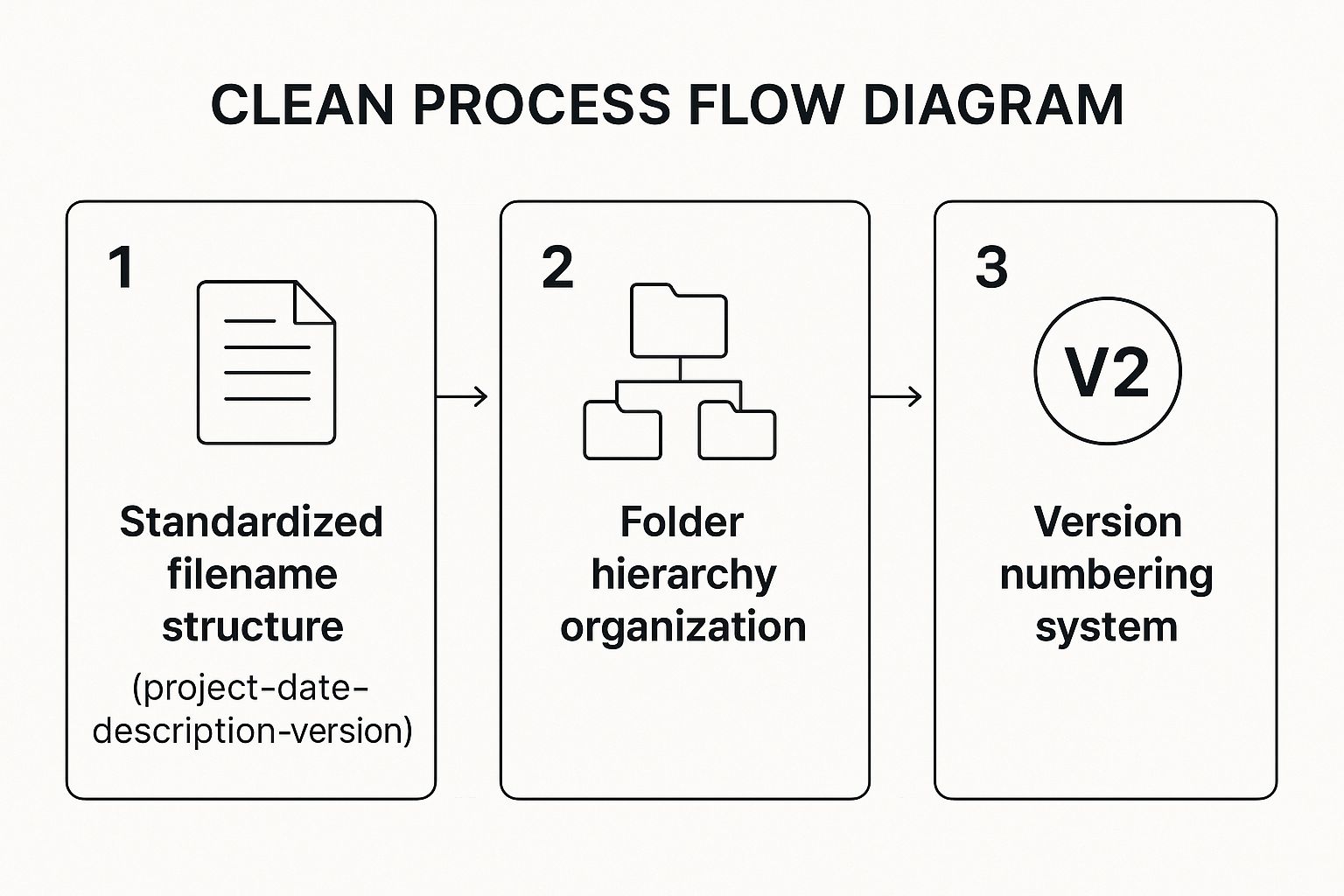
This process flow demonstrates how a standardized filename feeds into an organized folder structure, with a clear versioning system ensuring the most current asset is always identifiable.
4. Establish Version Control and Asset Lifecycle Management
Without a systematic process for managing revisions and lifecycles, digital assets quickly become a source of chaos and costly errors. Version control and asset lifecycle management provide the framework to track an asset’s journey from creation to archival, ensuring teams always use the correct, approved version. This practice eliminates confusion, maintains a complete historical record, and prevents outdated or unapproved content from being published.
Implementing this discipline is one of the most impactful digital asset management best practices for mitigating risk and improving operational efficiency. It defines clear stages for every asset, from a draft in progress to an active marketing campaign file, and finally to a retired or archived piece, optimizing storage and ensuring compliance.
How It Works in Practice
Leading platforms and industries demonstrate the power of structured versioning and lifecycle management. Adobe Experience Manager, for instance, creates a new version of a marketing asset each time it is modified and checked in, providing a full, auditable history. Similarly, major publishing houses use meticulous version control to track manuscripts through multiple rounds of edits, from the first draft to the final print-ready file, preventing critical errors. This shows that whether you are managing creative files or official documents, control over an asset's evolution is essential.
Actionable Implementation Tips
A systematic approach to versions and lifecycles prevents asset anarchy and ensures content integrity. You can start by building a clear and repeatable process.
Define Versioning Rules: Establish clear criteria for major versus minor versions (e.g., major 2.0 for a complete redesign, minor 1.1 for a small text edit). Automate version creation upon significant changes.
Implement Status Labels: Use clear, universally understood status labels like
In-Progress,Pending Review,Approved,Live, andArchived. Avoid ambiguous terms that can cause confusion.Create Version Notes Templates: Require users to briefly document what was changed in each new version. This simple step provides crucial context for future users and auditors.
Establish Retention Policies: Set clear rules for how long different versions are kept. For active projects, you might keep all versions, but for archived assets, you may only retain major milestones.
Archive, Don't Delete: Whenever possible, archive outdated or expired assets rather than deleting them permanently. This preserves historical records unless legal or compliance reasons require complete removal.
Schedule Regular Audits: Conduct quarterly or semi-annual reviews of assets with "Expired" or "Archived" statuses to ensure your DAM remains clean and your storage is used efficiently.
5. Integrate DAM with Existing Technology Stack and Workflows
A digital asset management system should never be an isolated island. True ROI is unlocked when your DAM is seamlessly woven into your existing martech stack, creating an interconnected ecosystem where content flows automatically between platforms. This practice eliminates data silos, automates tedious manual tasks like downloading and re-uploading files, and ensures brand consistency across every channel. By connecting your DAM to other critical business tools, you create a single source of truth that powers your entire content supply chain.
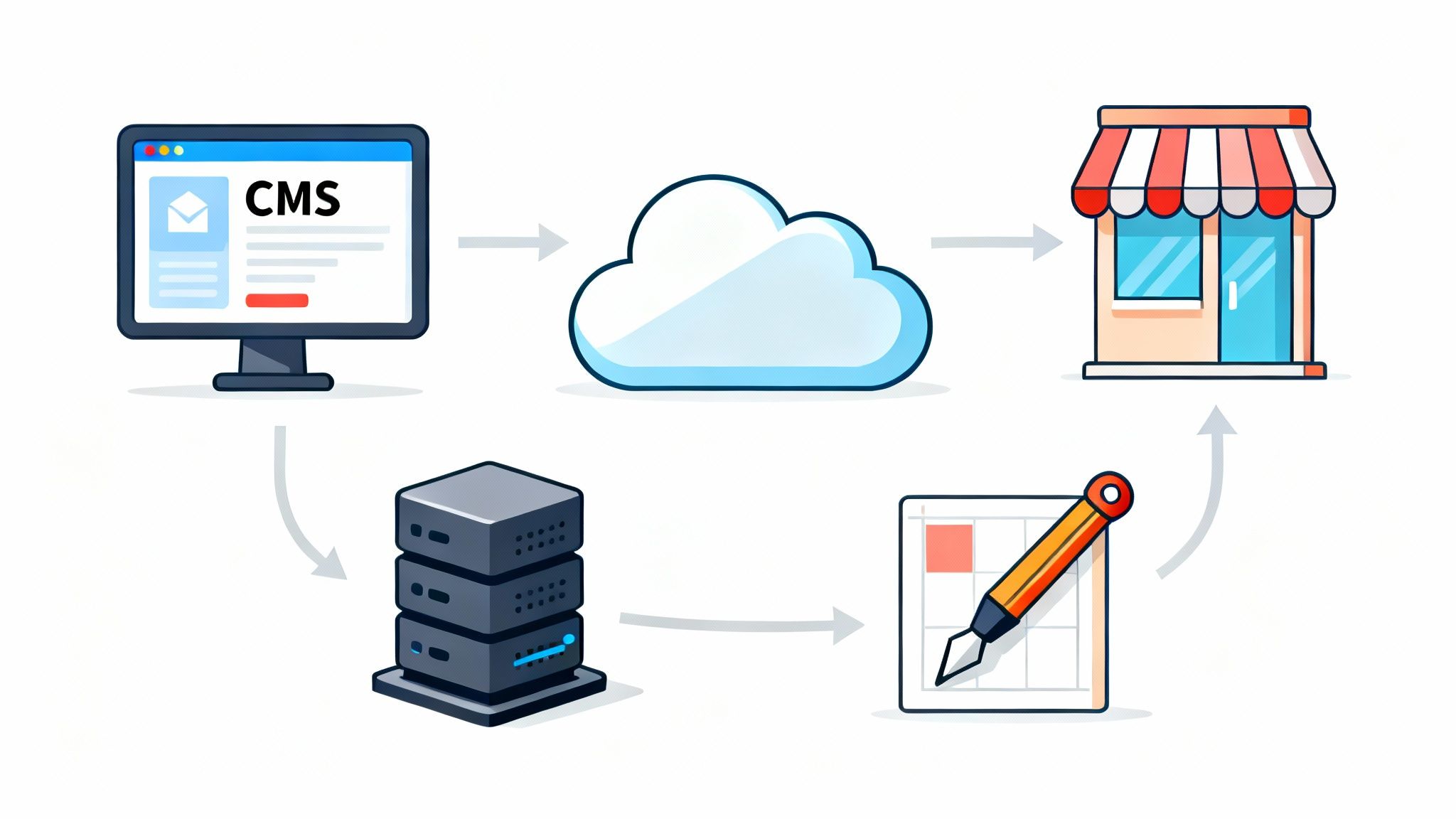
This integration strategy transforms your DAM from a simple storage repository into a dynamic content engine. It ensures that the right, approved assets are always available within the tools your teams use every day. This is one of the most impactful digital asset management best practices for boosting operational efficiency and maximizing the value of both your content and your software investments.
How It Works in Practice
Leading global brands leverage deep integrations to scale their content operations. L'Oréal, for instance, integrated its DAM with its e-commerce platform to automatically sync approved product images across more than 50 international markets, drastically reducing time-to-market. Similarly, Spotify connects its asset management system directly to distribution networks, ensuring album artwork is consistently and correctly delivered across all streaming platforms. These examples highlight how integration automates content delivery, enforces brand compliance, and accelerates workflows at scale.
Actionable Implementation Tips
A strategic approach to integration ensures a smooth and effective rollout. Focus on connecting systems that will deliver the highest impact on your daily workflows.
Map Your Ecosystem: Before selecting a DAM, identify all systems that create, use, or distribute digital assets (e.g., CMS, PIM, e-commerce platforms, social media tools). Understanding this map is crucial for choosing from the best digital asset management platforms that offer the right integrations.
Prioritize Connections: Start with integrations that solve the biggest pain points. Focus on high-frequency workflows, such as connecting your DAM to your content management system (CMS) or design tools like Adobe Creative Cloud.
Leverage Pre-Built Connectors: Opt for DAM systems with robust marketplaces of pre-built integrations. These are typically easier and more cost-effective to implement than custom-coded solutions.
Use Middleware for Flexibility: For systems without direct integrations, use middleware platforms like Zapier or Workato to create no-code or low-code connections, bridging the gap between applications.
Test Rigorously: Always test integrations in a staging or sandbox environment before deploying to production. This helps identify and resolve potential issues without disrupting live operations.
Document Everything: Create clear documentation for each integration workflow. This is invaluable for training new team members and for troubleshooting issues down the line.
6. Implement Automated Workflows and Approval Processes
Manual handoffs, endless email chains, and unclear approval statuses are significant drags on productivity. Implementing automated workflows is a transformative practice that streamlines the entire asset lifecycle, from creation and review to final distribution. It involves designing intelligent, rule-based sequences that automatically route assets to the right stakeholders for approval, ensuring compliance and brand consistency with minimal manual intervention. This eliminates bottlenecks and creates a transparent, auditable trail for every piece of content.
By replacing manual processes with automated logic, you drastically reduce time-to-market and free up creative teams to focus on high-value work instead of administrative tasks. This systematic approach to content governance is one of the most impactful digital asset management best practices for scaling operations efficiently. To implement truly efficient processes, consider exploring the fundamentals of workflow automation.
How It Works in Practice
Global giants have proven the immense value of automated workflows. Unilever, for instance, automated its approval workflows for packaging artwork across 190 countries, successfully reducing its time-to-market by a staggering 40%. Similarly, the BBC leverages automated compliance checks to verify rights and licensing information before assets even enter production pipelines. These examples highlight how automation enforces standards and accelerates content delivery, whether for a consumer product or a broadcast program. This concept of automation is also revolutionizing other industries, similar to how platforms enable automated crypto investing to optimize financial returns.
Actionable Implementation Tips
Integrating automated workflows can be done systematically to ensure high adoption and immediate impact.
Target the Pain Points: Start by automating your most time-consuming or error-prone manual process, such as campaign creative review or legal approval for marketing materials.
Keep It Simple: Complexity is the enemy of adoption. Design straightforward workflows with clear stages and minimal steps. Overly complicated processes are often ignored.
Build in Flexibility: Include an emergency "fast-track" option for urgent assets that need to bypass standard sequential reviews, but ensure it requires specific permissions.
Set Clear SLAs: Define realistic service-level agreements for each review stage and configure automatic notifications or escalations when deadlines are missed.
Ensure Full Visibility: Use dashboards to provide stakeholders with a clear view of where an asset is in the approval process, who is responsible for the next step, and how long it has been there.
Require Justification: Configure your system so that reviewers must provide comments when rejecting an asset, giving creators specific feedback for revisions.
Monitor and Optimize: Regularly review workflow metrics to identify bottlenecks. Use this data to refine processes and improve efficiency on a quarterly basis.
7. Prioritize User Training and Change Management
A state-of-the-art DAM platform is only as valuable as its adoption rate. This critical practice recognizes that technology alone doesn't solve problems; true success hinges on user proficiency and buy-in. Prioritizing comprehensive training and a thoughtful change management strategy ensures that your investment translates into tangible efficiency gains across the entire organization. Without it, even the most powerful system will fail to deliver its promised ROI, leading to low adoption, inconsistent usage, and a return to inefficient, fragmented workflows.
This approach treats the DAM implementation not just as a software rollout but as a fundamental shift in how people work. Investing in education and support transforms user hesitation into confident advocacy, making it one of the most essential digital asset management best practices for long-term success and system sustainability.
How It Works in Practice
Global brands understand that user empowerment is non-negotiable. Marriott International, for instance, created a global DAM training program supported by regional champions to achieve an impressive 95% user adoption rate across 7,000 properties. Similarly, IBM developed role-based learning paths with certification programs to ensure deep competency across its enterprise DAM. These examples highlight a key truth: investing in your people is as important as investing in the platform itself.
Actionable Implementation Tips
Building a culture of DAM proficiency requires a structured, ongoing effort. A multi-faceted approach to training ensures users feel supported from day one and beyond.
Start Training Before Launch: Build excitement and prepare users by offering sneak peeks and foundational training sessions before the official go-live date.
Create Bite-Sized Learning Modules: Develop short, focused video tutorials (5-10 minutes) that cover specific tasks, like uploading assets or creating collections.
Develop Role-Specific Guides: Tailor documentation to different user groups, such as a "DAM for Marketers" guide or a "DAM for Designers" quick-start sheet.
Identify and Empower Champions: Appoint enthusiastic super-users in each department to provide peer-to-peer support, answer questions, and advocate for the system.
Establish a Knowledge Base: Create a centralized, searchable hub with FAQs, how-to articles, and recorded training sessions for easy, on-demand access to information.
Gather Continuous Feedback: Survey users quarterly to identify pain points, uncover training gaps, and gather suggestions for system improvements.
Celebrate Success Stories: Publicly share wins and highlight how teams are using the DAM to achieve their goals, which helps build positive momentum and encourages adoption.
8. Establish Governance, Maintenance, and Continuous Improvement Processes
Implementing a DAM system is not a one-and-done project; it is a long-term commitment. Establishing robust governance, maintenance, and continuous improvement processes treats your DAM as a living, breathing ecosystem that evolves with your organization. This practice involves creating the structures, policies, and review cycles needed to ensure the system remains healthy, relevant, and valuable over time, preventing it from degrading into a disorganized digital attic.
Without ongoing oversight, even the most well-designed DAM will suffer from stale content, inconsistent metadata, and declining user adoption. This commitment to continuous improvement is one of the most vital digital asset management best practices for protecting your investment and maximizing its long-term ROI. It ensures the platform consistently aligns with changing business needs and technological advancements.
How It Works in Practice
Leading organizations treat DAM governance as a strategic function. National Geographic, for instance, maintains a dedicated DAM governance board that meets monthly to review taxonomy updates, analyze usage patterns, and approve system enhancements. Similarly, Microsoft conducts rigorous quarterly asset audits across its enterprise DAM, methodically archiving unused assets and refining metadata standards to maintain peak performance and relevance for its global teams. These examples highlight a proactive, rather than reactive, approach to system management.
Actionable Implementation Tips
Building a sustainable governance model requires a clear framework and consistent execution. A strategic approach will keep your DAM system optimized for years to come.
Form a Governance Committee: Assemble a cross-functional team with representatives from marketing, legal, IT, and creative departments. Grant this committee clear decision-making authority on policies, standards, and system changes.
Define and Track KPIs: Establish key performance indicators aligned with business goals. Track metrics like asset reuse rate, search success rate, time saved per user, and user satisfaction to measure impact and identify areas for improvement.
Schedule Regular System Reviews: Implement a schedule for quarterly health checks and annual deep-dive reviews. Use these meetings to assess performance, gather user feedback, and refine your roadmap.
Implement Asset Lifecycle Policies: Create clear, documented rules for asset retirement. Define what gets archived, when, and why, and automate the process where possible to keep the library clean and relevant.
Conduct Annual Taxonomy Audits: Revisit your taxonomy and metadata schema annually with stakeholder input. Ensure it still reflects current business terminology, campaign structures, and user needs.
Budget for Ongoing Improvement: Earmark a portion of your budget (typically 10-15% of the initial investment annually) for ongoing system maintenance, upgrades, and new feature integrations.
Maintain a Public Roadmap: Keep users informed and engaged by sharing a transparent roadmap of upcoming changes, new features, and planned improvements.
DAM Best Practices Comparison Matrix
Aspect | Establish a Consistent Taxonomy and Metadata Strategy | Implement Role-Based Access Control (RBAC) and Permissions | Define Clear Naming Conventions and File Organization Standards | Establish Version Control and Asset Lifecycle Management | Integrate DAM with Existing Technology Stack and Workflows | Implement Automated Workflows and Approval Processes | Prioritize User Training and Change Management | Establish Governance, Maintenance, and Continuous Improvement Processes |
|---|---|---|---|---|---|---|---|---|
Implementation Complexity 🔄 | High – requires upfront planning, stakeholder alignment, ongoing governance | Medium – needs role mapping, ongoing admin, regular audits | Medium – needs discipline and enforcement, retroactive challenges | Medium-High – involves versioning tools, policies, and user training | High – requires technical expertise, custom development, middleware | Medium-High – workflow design, configuration, and ongoing optimization | Medium – continuous training design and delivery requires effort | Medium-High – ongoing committee management and regular audits |
Resource Requirements ⚡ | Significant upfront and maintenance effort | Continuous administration and monitoring | Training and documentation; enforcement tools | User training plus versioning infrastructure | Skilled IT staff, integration middleware, testing resources | Initial configuration and ongoing monitoring resources | Time and personnel for comprehensive ongoing training programs | Dedicated resources for governance, audits, and process evolution |
Expected Outcomes 📊 | ⭐⭐⭐⭐⭐ Improves searchability & asset reuse; scalable taxonomy | ⭐⭐⭐⭐ Protects IP; compliance; secure collaboration | ⭐⭐⭐⭐ Instant asset recognition; version clarity | ⭐⭐⭐⭐ Clear version history; reduces conflicts; storage optimization | ⭐⭐⭐⭐ Seamless workflows; less redundancy; better ROI | ⭐⭐⭐⭐ Faster approvals; accountability; compliance | ⭐⭐⭐⭐ Higher adoption; user confidence; less support needed | ⭐⭐⭐⭐ Sustained system health; improved data quality; user trust |
Ideal Use Cases 💡 | Large, growing asset libraries needing organized metadata | Organizations with sensitive assets and compliance needs | Environments requiring fast asset ID without heavy search | Teams with frequent asset updates needing revision control | Enterprises using multiple creative, marketing, and publishing tools | Teams with complex review processes needing automation | Enterprises struggling with DAM adoption and user engagement | Organizations focused on long-term DAM value and continuous improvement |
Key Advantages ⭐ | Improved discoverability, compliance, scalability | Protects assets, controls access, supports secure collaboration | Consistent naming reduces confusion, supports automation | Prevents version conflicts, audit trails, approval clarity | Eliminates silos, automates asset flow, maximizes consistency | Reduces bottlenecks, enforces compliance, scalable | Maximizes DAM ROI, reduces support, promotes best practices | Prevents decay, adapts system to needs, maintains high-quality data |
From Chaos to Control: Making Your DAM Strategy a Reality
Navigating the complexities of the digital landscape requires more than just accumulating assets; it demands a strategic, disciplined approach to managing them. The journey from digital chaos to streamlined control is built on the foundational pillars we've explored. Implementing these digital asset management best practices is not a one-time setup but a dynamic, ongoing commitment to operational excellence and strategic foresight.
By moving beyond simple storage and embracing a holistic management strategy, you unlock the true potential of your digital library. This transformation empowers your teams, secures your intellectual property, and creates a scalable foundation for future growth.
Synthesizing Your DAM Master Plan
Reflecting on the core principles discussed, several key takeaways emerge as critical for success. These are not just individual tips but interconnected components of a robust ecosystem.
Foundation First: Everything starts with a logical taxonomy and metadata strategy. Without this, even the most advanced system will fail. It’s the architectural blueprint for your entire digital asset library, ensuring every file is discoverable and its context is preserved.
Security by Design: Role-Based Access Control (RBAC) is non-negotiable. Proactively defining who can see, use, and modify assets protects your brand from misuse, accidental deletion, and intellectual property theft. It’s about granting access, not restricting it, to ensure the right people have the right tools.
Consistency is King: From file naming conventions to version control, consistency eliminates ambiguity and friction. When everyone follows the same playbook, collaboration becomes seamless, and the "single source of truth" becomes a reality, not just an aspiration.
Automation and Integration: The true power of a modern DAM system is realized when it’s woven into your existing tech stack. Automated workflows and seamless integrations with tools like your CMS or marketing automation platform turn your asset library into an active, intelligent hub that accelerates your entire content supply chain.
Turning Knowledge into Actionable Strategy
The transition from theory to practice can seem daunting, but it’s a journey of a thousand small, deliberate steps. Don't aim for a perfect system overnight. Instead, focus on incremental progress and building momentum. Start by auditing your current state of digital disarray. Identify the most significant pain points for your team: Is it finding the latest logo? Is it managing campaign asset approvals?
Tackle that one problem first. Implement a clear naming convention for a single project or define access roles for one department. This initial victory will demonstrate value and build the business case for wider adoption. Remember, user training and change management are just as important as the technology itself. A powerful system that no one knows how to use is merely expensive storage.
Key Insight: A successful DAM implementation is less about a technological revolution and more about a cultural evolution. It’s about fostering a shared sense of ownership and discipline in how your organization creates, manages, and leverages its most valuable digital resources.
Mastering these digital asset management best practices ultimately transforms your assets from a passive, disorganized collection of files into a strategic advantage that fuels creativity, accelerates time-to-market, and protects your brand integrity. It’s a commitment to bringing order, intelligence, and efficiency to the heart of your digital operations. This same principle of applying intelligent, automated management to unlock value extends beyond creative assets and into the world of finance.
Just as a well-organized DAM system brings automated efficiency to your creative assets, Yield Seeker applies the same principles of intelligent management to your financial assets. Our AI-powered platform navigates the complexities of DeFi to find and execute the best stablecoin yield strategies, ensuring your capital is always working smarter, not harder. Discover how our automated approach to asset management can optimize your returns by visiting us at Yield Seeker.